
A concerning tree is not always an emergency, and a visible defect does not automatically mean removal is required. The useful next step is to document what changed, limit exposure to the area, and seek an appropriate on-site evaluation.
Reasons Owners Become Concerned
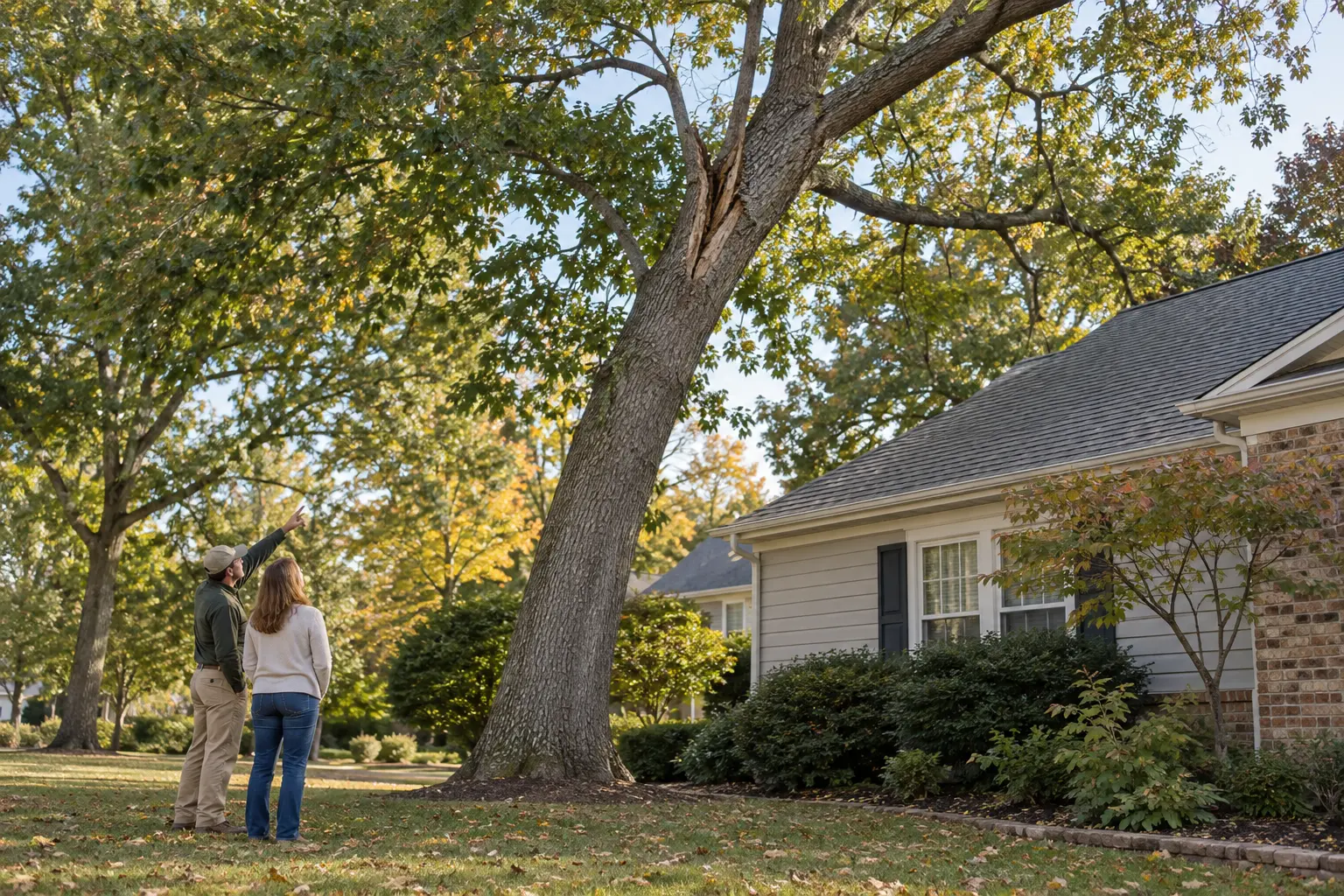
Observable concerns can include a new or increasing lean, cracks in the trunk or a major union, large dead branches, broken hanging limbs, cavities, mushrooms near the base, lifting soil, exposed or damaged roots, sudden canopy dieback, or a tree that changed after excavation or a storm. These signs provide context; they are not a complete diagnosis.
Planned Concern or Immediate Hazard?
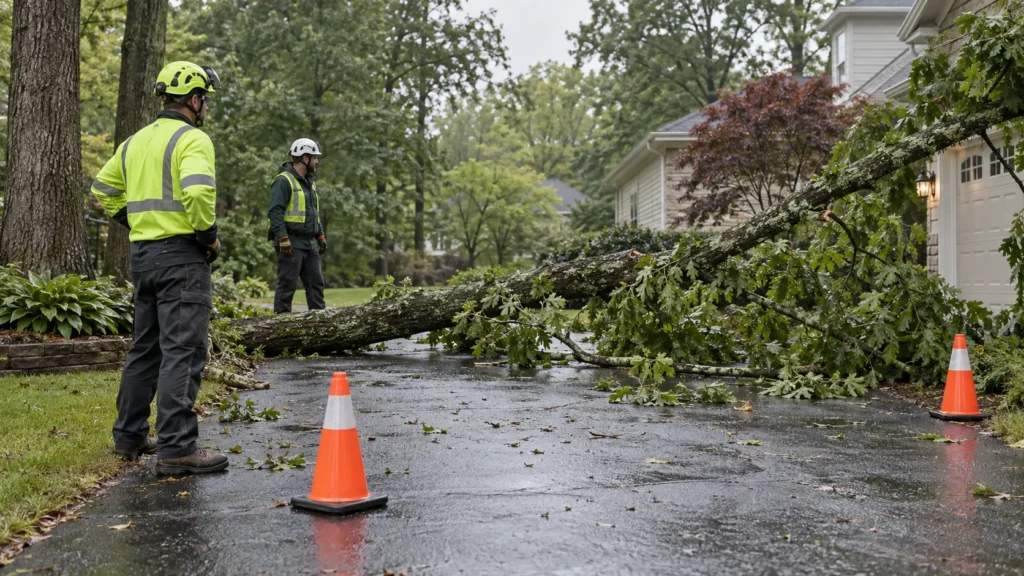
A tree that has been declining for months may be handled through a planned estimate. A recently split tree, a shifting root plate, a large suspended limb, or a tree contacting electrical lines calls for greater urgency. Keep people away and use emergency or utility channels first when life safety or power infrastructure is involved.
Evaluation and Removal Scope
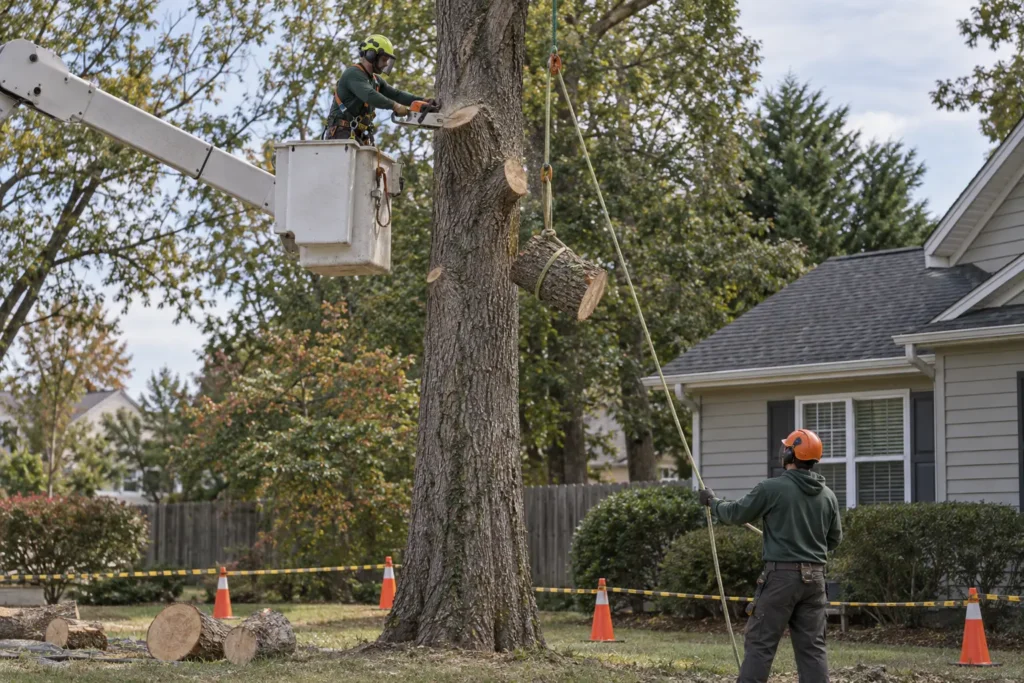
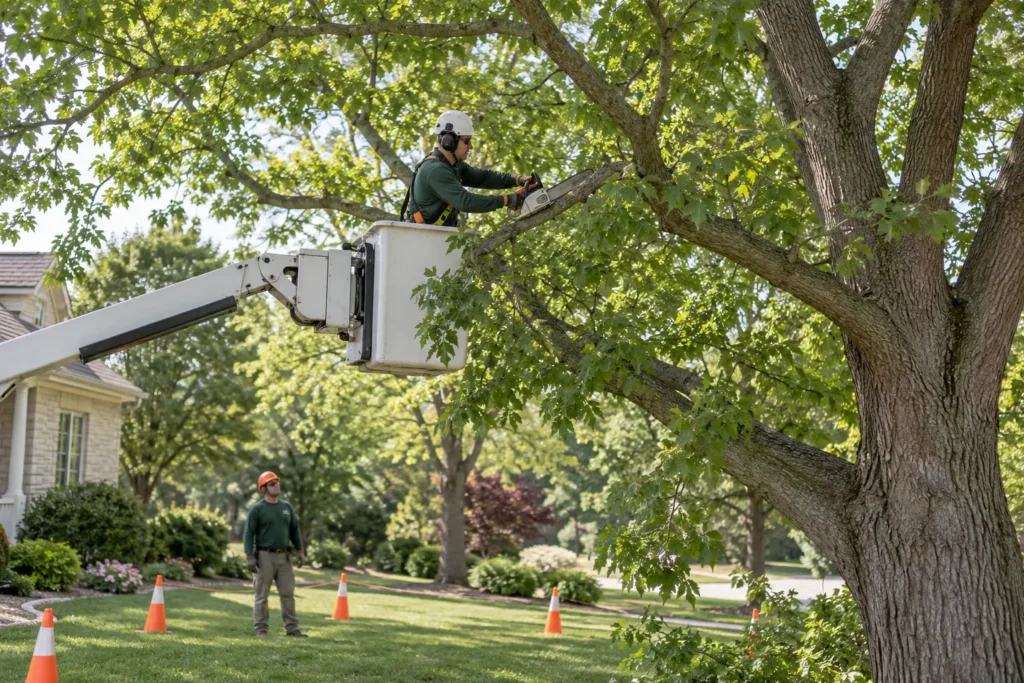
A provider may assess access, targets within reach of the tree, tree condition, space for equipment, and how sections can be controlled. If the decision depends on diagnosis, preservation options, or a formal risk assessment, ask whether an ISA Certified Arborist or another suitably qualified professional should be involved and verify credentials independently.
What to Ask Before Work Begins
Confirm the tree identification, included work, debris and stump handling, protection measures, insurance, schedule, and exclusions. If the tree is near a boundary, right-of-way, easement, or protected area, confirm ownership and any approval requirements before authorizing removal.
Request an Estimate for a Concerning Tree
Describe the observable issue, when it appeared, what is within falling distance, and whether recent weather or construction may be relevant. Photos should be taken only from safe ground.
Frequently Asked Questions
Provide the property location, tree or stump count, approximate size, reason for the work, nearby structures or utilities, access limits, desired cleanup, and preferred timing. Safe photographs can support the initial conversation, but final scope may require an on-site review.
Related Tree Service Information
- Review Signs a Tree May Be Hazardous for additional planning information and the next appropriate step.
- Review Tree Removal for additional planning information and the next appropriate step.
- Review Emergency Tree Service for additional planning information and the next appropriate step.
- Review Request an Estimate for additional planning information and the next appropriate step.
Request a Project-Specific Estimate
Share the property location, tree concern, access details, nearby structures, desired outcome, and safe photos when available.
Request a Hazard-Related Estimate
Independent Resource Disclosure
Fredericksburg Trees is an independent information and estimate-request resource. We do not directly perform tree services. Information submitted through this website may be shared with an independent local service provider that can respond to your request. Provider availability, qualifications, licensing, insurance, pricing, warranties, and project terms should be confirmed directly with the provider.